GeneXus is a low code, cross-platform, knowledge representation-based development tool, mainly oriented towards enterprise-class applications for web applications, smart devices, and the Microsoft Windows platform. GeneXus uses mostly declarative language to generate native code for multiple environments. It includes a normalization module, which creates and maintains an optimal database structure based on user views. The languages for which code can be generated include COBOL, Java, Objective-C, RPG, Ruby, Visual Basic, and Visual FoxPro. Some of the DBMSs supported are Microsoft SQL Server, Oracle, IBM Db2, Informix, PostgreSQL, and MySQL. GeneXus was developed by Uruguayan company ARTech Consultores SRL which later renamed to Genexus SA. The latest version is GeneXus 18, which was released on November 10, 2022.
Color balance
In photography and image processing, color balance is the global adjustment of the intensities of the colors (typically red, green, and blue primary colors). An important goal of this adjustment is to render specific colors – particularly neutral colors like white or grey – correctly. Hence, the general method is sometimes called gray balance, neutral balance, or white balance. Color balance changes the overall mixture of colors in an image and is used for color correction. Generalized versions of color balance are used to correct colors other than neutrals or to deliberately change them for effect. White balance is one of the most common kinds of balancing, and is when colors are adjusted to make a white object (such as a piece of paper or a wall) appear white and not a shade of any other colour. Image data acquired by sensors – either film or electronic image sensors – must be transformed from the acquired values to new values that are appropriate for color reproduction or display. Several aspects of the acquisition and display process make such color correction essential – including that the acquisition sensors do not match the sensors in the human eye, that the properties of the display medium must be accounted for, and that the ambient viewing conditions of the acquisition differ from the display viewing conditions. The color balance operations in popular image editing applications usually operate directly on the red, green, and blue channel pixel values, without respect to any color sensing or reproduction model. In film photography, color balance is typically achieved by using color correction filters over the lights or on the camera lens. == Generalized color balance == Sometimes the adjustment to keep neutrals neutral is called white balance, and the phrase color balance refers to the adjustment that in addition makes other colors in a displayed image appear to have the same general appearance as the colors in an original scene. It is particularly important that neutral (gray, neutral, white) colors in a scene appear neutral in the reproduction. === Psychological color balance === Humans relate to flesh tones more critically than other colors. Trees, grass and sky can all be off without concern, but if human flesh tones are 'off' then the human subject can look sick or dead. To address this critical color balance issue, the tri-color primaries themselves are formulated to not balance as a true neutral color. The purpose of this color primary imbalance is to more faithfully reproduce the flesh tones through the entire brightness range. == Illuminant estimation and adaptation == Most digital cameras have means to select color correction based on the type of scene lighting, using either manual lighting selection, automatic white balance, or custom white balance. The algorithms for these processes perform generalized chromatic adaptation. Many methods exist for color balancing. Setting a button on a camera is a way for the user to indicate to the processor the nature of the scene lighting. Another option on some cameras is a button which one may press when the camera is pointed at a gray card or other neutral colored object. This captures an image of the ambient light, which enables a digital camera to set the correct color balance for that light. There is a large literature on how one might estimate the ambient lighting from the camera data and then use this information to transform the image data. A variety of algorithms have been proposed, and the quality of these has been debated. A few examples and examination of the references therein will lead the reader to many others. Examples are Retinex, an artificial neural network or a Bayesian method. == Chromatic colors == Color balancing an image affects not only the neutrals, but other colors as well. An image that is not color balanced is said to have a color cast, as everything in the image appears to have been shifted towards one color. Color balancing may be thought in terms of removing this color cast. Color balance is also related to color constancy. Algorithms and techniques used to attain color constancy are frequently used for color balancing, as well. Color constancy is, in turn, related to chromatic adaptation. Conceptually, color balancing consists of two steps: first, determining the illuminant under which an image was captured; and second, scaling the components (e.g., R, G, and B) of the image or otherwise transforming the components so they conform to the viewing illuminant. Viggiano found that white balancing in the camera's native RGB color model tended to produce less color inconstancy (i.e., less distortion of the colors) than in monitor RGB for over 4000 hypothetical sets of camera sensitivities. This difference typically amounted to a factor of more than two in favor of camera RGB. This means that it is advantageous to get color balance right at the time an image is captured, rather than edit later on a monitor. If one must color balance later, balancing the raw image data will tend to produce less distortion of chromatic colors than balancing in monitor RGB. == Mathematics of color balance == Color balancing is sometimes performed on a three-component image (e.g., RGB) using a 3x3 matrix. This type of transformation is appropriate if the image was captured using the wrong white balance setting on a digital camera, or through a color filter. Changing the color balance of an image can improve classifier results on a trained ML model. === Scaling monitor R, G, and B === In principle, one wants to scale all relative luminances in an image so that objects which are believed to be neutral appear so. If, say, a surface with R = 240 {\displaystyle R=240} was believed to be a white object, and if 255 is the count which corresponds to white, one could multiply all red values by 255/240. Doing analogously for green and blue would result, at least in theory, in a color balanced image. In this type of transformation the 3x3 matrix is a diagonal matrix. [ R G B ] = [ 255 / R w ′ 0 0 0 255 / G w ′ 0 0 0 255 / B w ′ ] [ R ′ G ′ B ′ ] {\displaystyle \left[{\begin{array}{c}R\\G\\B\end{array}}\right]=\left[{\begin{array}{ccc}255/R'_{w}&0&0\\0&255/G'_{w}&0\\0&0&255/B'_{w}\end{array}}\right]\left[{\begin{array}{c}R'\\G'\\B'\end{array}}\right]} where R {\displaystyle R} , G {\displaystyle G} , and B {\displaystyle B} are the color balanced red, green, and blue components of a pixel in the image; R ′ {\displaystyle R'} , G ′ {\displaystyle G'} , and B ′ {\displaystyle B'} are the red, green, and blue components of the image before color balancing, and R w ′ {\displaystyle R'_{w}} , G w ′ {\displaystyle G'_{w}} , and B w ′ {\displaystyle B'_{w}} are the red, green, and blue components of a pixel which is believed to be a white surface in the image before color balancing. This is a simple scaling of the red, green, and blue channels, and is why color balance tools in Photoshop have a white eyedropper tool. It has been demonstrated that performing the white balancing in the phosphor set assumed by sRGB tends to produce large errors in chromatic colors, even though it can render the neutral surfaces perfectly neutral. === Scaling X, Y, Z === If the image may be transformed into CIE XYZ tristimulus values, the color balancing may be performed there. This has been termed a "wrong von Kries" transformation. Although it has been demonstrated to offer usually poorer results than balancing in monitor RGB, it is mentioned here as a bridge to other things. Mathematically, one computes: [ X Y Z ] = [ X w / X w ′ 0 0 0 Y w / Y w ′ 0 0 0 Z w / Z w ′ ] [ X ′ Y ′ Z ′ ] {\displaystyle \left[{\begin{array}{c}X\\Y\\Z\end{array}}\right]=\left[{\begin{array}{ccc}X_{w}/X'_{w}&0&0\\0&Y_{w}/Y'_{w}&0\\0&0&Z_{w}/Z'_{w}\end{array}}\right]\left[{\begin{array}{c}X'\\Y'\\Z'\end{array}}\right]} where X {\displaystyle X} , Y {\displaystyle Y} , and Z {\displaystyle Z} are the color-balanced tristimulus values; X w {\displaystyle X_{w}} , Y w {\displaystyle Y_{w}} , and Z w {\displaystyle Z_{w}} are the tristimulus values of the viewing illuminant (the white point to which the image is being transformed to conform to); X w ′ {\displaystyle X'_{w}} , Y w ′ {\displaystyle Y'_{w}} , and Z w ′ {\displaystyle Z'_{w}} are the tristimulus values of an object believed to be white in the un-color-balanced image, and X ′ {\displaystyle X'} , Y ′ {\displaystyle Y'} , and Z ′ {\displaystyle Z'} are the tristimulus values of a pixel in the un-color-balanced image. If the tristimulus values of the monitor primaries are in a matrix P {\displaystyle \mathbf {P} } so that: [ X Y Z ] = P [ L R L G L B ] {\displaystyle \left[{\begin{array}{c}X\\Y\\Z\end{array}}\right]=\mathbf {P} \left[{\begin{array}{c}L_{R}\\L_{G}\\L_{B}\end{array}}\right]} where L R {\displaystyle L_{R}} , L G {\displaystyle L_{G}} , and L B {\displaystyle L_{B}} are the un-gamma corrected monitor RGB, one may use: [ L R L G L B ] = P − 1 [ X w / X w ′ 0 0
Universal psychometrics
Universal psychometrics encompasses psychometrics instruments that could measure the psychological properties of any intelligent agent. Up until the early 21st century, psychometrics relied heavily on psychological tests that require the subject to cooperate and answer questions, the most famous example being an intelligence test. Such methods are only applicable to the measurement of human psychological properties. As a result, some researchers have proposed the idea of universal psychometrics - they suggest developing testing methods that allow for the measurement of non-human entities' psychological properties. For example, it has been suggested that the Turing test is a form of universal psychometrics. This test involves having testers (without any foreknowledge) attempt to distinguish a human from a machine by interacting with both (while not being to see either individuals). It is supposed that if the machine is equally intelligent to a human, the testers will not be able to distinguish between the two, i.e., their guesses will not be better than chance. Thus, Turing test could measure the intelligence (a psychological variable) of an AI. Other instruments proposed for universal psychometrics include reinforcement learning and measuring the ability to predict complexity.
Halite AI Programming Competition
Halite is an open-source computer programming contest developed by the hedge fund/tech firm Two Sigma in partnership with a team at Cornell Tech. Programmers can see the game environment and learn everything they need to know about the game. Participants are asked to build bots in whichever language they choose to compete on a two-dimensional virtual battle field. == History == Benjamin Spector and Michael Truell created the first Halite competition in 2016, before partnering with Two Sigma later that year. === Halite I === Halite I asked participants to conquer territory on a grid. It launched in November 2016 and ended in February 2017. Halite I attracted about 1,500 players. === Halite II === Halite II was similar to Halite I, but with a space-war theme. It ran from October 2017 until January 2018. The second installment of the competition attracted about 6,000 individual players from more than 100 countries. Among the participants were professors, physicists and NASA engineers, as well as high school and university students. === Halite III === Halite III launched in mid-October 2018. It ran from October 2018 to January 2019, with an ocean themed playing field. Players were asked to collect and manage Halite, an energy resource. By the end of the competition, Halite III included more than 4000 players and 460 organizations. === Halite IV === Halite IV was hosted by Kaggle, and launched in mid-June 2020.
Structured sparsity regularization
Structured sparsity regularization is a class of methods, and an area of research in statistical learning theory, that extend and generalize sparsity regularization learning methods. Both sparsity and structured sparsity regularization methods seek to exploit the assumption that the output variable Y {\displaystyle Y} (i.e., response, or dependent variable) to be learned can be described by a reduced number of variables in the input space X {\displaystyle X} (i.e., the domain, space of features or explanatory variables). Sparsity regularization methods focus on selecting the input variables that best describe the output. Structured sparsity regularization methods generalize and extend sparsity regularization methods, by allowing for optimal selection over structures like groups or networks of input variables in X {\displaystyle X} . Common motivation for the use of structured sparsity methods are model interpretability, high-dimensional learning (where dimensionality of X {\displaystyle X} may be higher than the number of observations n {\displaystyle n} ), and reduction of computational complexity. Moreover, structured sparsity methods allow to incorporate prior assumptions on the structure of the input variables, such as overlapping groups, non-overlapping groups, and acyclic graphs. Examples of uses of structured sparsity methods include face recognition, magnetic resonance image (MRI) processing, socio-linguistic analysis in natural language processing, and analysis of genetic expression in breast cancer. == Definition and related concepts == === Sparsity regularization === Consider the linear kernel regularized empirical risk minimization problem with a loss function V ( y i , f ( x ) ) {\displaystyle V(y_{i},f(x))} and the ℓ 0 {\displaystyle \ell _{0}} "norm" as the regularization penalty: min w ∈ R d 1 n ∑ i = 1 n V ( y i , ⟨ w , x i ⟩ ) + λ ‖ w ‖ 0 , {\displaystyle \min _{w\in \mathbb {R} ^{d}}{\frac {1}{n}}\sum _{i=1}^{n}V(y_{i},\langle w,x_{i}\rangle )+\lambda \|w\|_{0},} where x , w ∈ R d {\displaystyle x,w\in \mathbb {R^{d}} } , and ‖ w ‖ 0 {\displaystyle \|w\|_{0}} denotes the ℓ 0 {\displaystyle \ell _{0}} "norm", defined as the number of nonzero entries of the vector w {\displaystyle w} . f ( x ) = ⟨ w , x i ⟩ {\displaystyle f(x)=\langle w,x_{i}\rangle } is said to be sparse if ‖ w ‖ 0 = s < d {\displaystyle \|w\|_{0}=s
Bigram
A bigram or digram is a sequence of two adjacent elements from a string of tokens, which are typically letters, syllables, or words. A bigram is an n-gram for n=2. The frequency distribution of every bigram in a string is commonly used for simple statistical analysis of text in many applications, including in computational linguistics, cryptography, and speech recognition. Gappy bigrams or skipping bigrams are word pairs which allow gaps (perhaps avoiding connecting words, or allowing some simulation of dependencies, as in a dependency grammar). == Applications == Bigrams, along with other n-grams, are used in most successful language models for speech recognition. Bigram frequency attacks can be used in cryptography to solve cryptograms. See frequency analysis. Bigram frequency is one approach to statistical language identification. Some activities in logology or recreational linguistics involve bigrams. These include attempts to find English words beginning with every possible bigram, or words containing a string of repeated bigrams, such as logogogue. == Bigram frequency in the English language == The frequency of the most common letter bigrams in a large English corpus is: th 3.56% of 1.17% io 0.83% he 3.07% ed 1.17% le 0.83% in 2.43% is 1.13% ve 0.83% er 2.05% it 1.12% co 0.79% an 1.99% al 1.09% me 0.79% re 1.85% ar 1.07% de 0.76% on 1.76% st 1.05% hi 0.76% at 1.49% to 1.05% ri 0.73% en 1.45% nt 1.04% ro 0.73% nd 1.35% ng 0.95% ic 0.70% ti 1.34% se 0.93% ne 0.69% es 1.34% ha 0.93% ea 0.69% or 1.28% as 0.87% ra 0.69% te 1.20% ou 0.87% ce 0.65%
Ameca (robot)
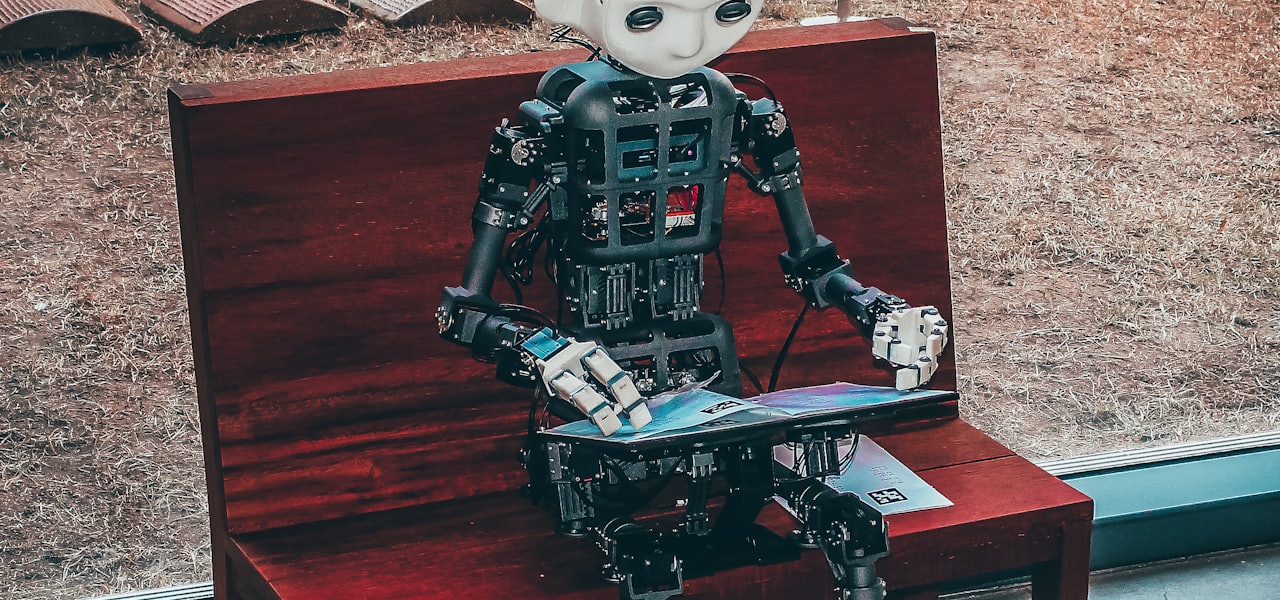
Ameca is a robotic humanoid created in 2021 by Engineered Arts, headquarters in Falmouth, Cornwall, United Kingdom. The project commenced in February 2021, and the first public demonstration was at the CES 2022 show in Las Vegas. Ameca's appearance features grey rubber skin on the face and hands, and is specifically designed to appear genderless. In 2024, an Ameca unit was installed in Edinburgh in the UK to reside at the National Robotarium. Ameca generation 3 has been released and showcased at ICRA 2025 along with Ami. == History == The first generation of Ameca was developed at Engineered Arts headquarters in Falmouth, Cornwall, United Kingdom. The project started in February 2021, with the first video revealed publicly on 1 December 2021. Ameca gained widespread attention on Twitter and TikTok ahead of its first public demonstration at the Consumer Electronics Show 2022, where it was covered by CNET and other news outlets. In 2022, Ameca presented an Alternative Christmas message by British TV Channel 4 for Christmas Day. Ameca was associated with the Museum of the Future's robotic family, where it could interact with visitors. In 2024, an Ameca unit was installed in Edinburgh in the UK to reside at the National Robotarium. In January 2026, Ameca served as an ambassador for the European Space Agency (ESA) at the 18th European Space Conference. == Features == It is designed as a platform for further developing robotics technologies involving human-robot interaction. utilizes embedded microphones, binocular eye mounted cameras, a chest camera and facial recognition software to interact with the public. Interactions can be governed by either OpenAI's GPT-3 or human telepresence. It also features articulated motorized arms, fingers, neck and facial features. Ameca's appearance features grey rubber skin on the face and hands, and is specifically designed to appear genderless. == Public appearances == Computer History Museum, California Heinz Nixdorf MuseumsForum, Paderborn, Germany Copernicus Science Center, Warsaw, Poland Museum of the Future, Dubai Consumer Electronics Show 2022 Deutsches Museum Nuremberg OMR Festival 2022 Hosted by Vodafone GITEX 2022 International Conference on Robotics and Automation 2023 International Telecommunication Union AI for Good Global Summit 2023 Sphere (Not Ameca, Custom humanoid named Aura built on Ameca technology)